Siegfried Sassoon nel “Prisma lirico” di oggi conVasilij Kandinskij
traduzione di Loredana Semantica
L’ira di ottobre muggendo spacca e devasta l’artiglieria di bronzo del bosco sotto attacco nel cui lamento sento una voce dolente per il fallimento della battaglia e per la faida che oltraggia gli uomini. Le loro vite sono come foglie sparse in stormi di rovina, disperse e gettate nella fornace che arde rossa verso occidente. Oh gioventù martirizzata e virilità sconvolta, il peso dei vostri torti è sulla mia testa.
October’s bellowing anger breakes and cleaves The bronzed battalions of the stricken wood In whose lament I hear a voice that grieves For battle’s fruitless harvest, and the feud Of outrage men. Their lives are like the leaves Scattered in flocks of ruin, tossed and blown Along the westering furnace flaring red. O martyred youth and manhood overthrown, The burden of your wrongs is on my head.
Vasilij Kandinskij
Poesia: Autunno di Siegfried Sassoon da “Counter-Attack and Other Poems“, 1918
Opere:
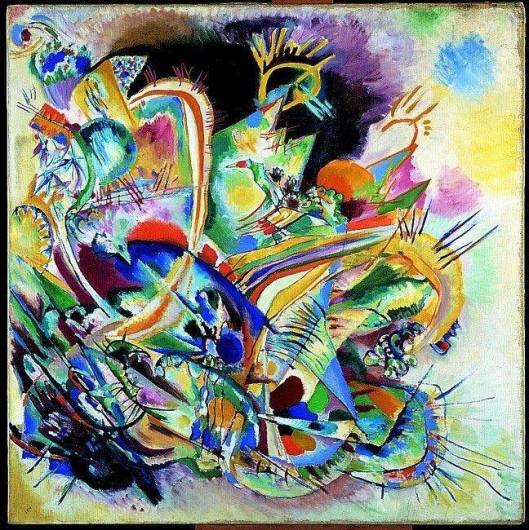
di Vasilij Kandinskij, Park of St Cloud-Autumn, 1906
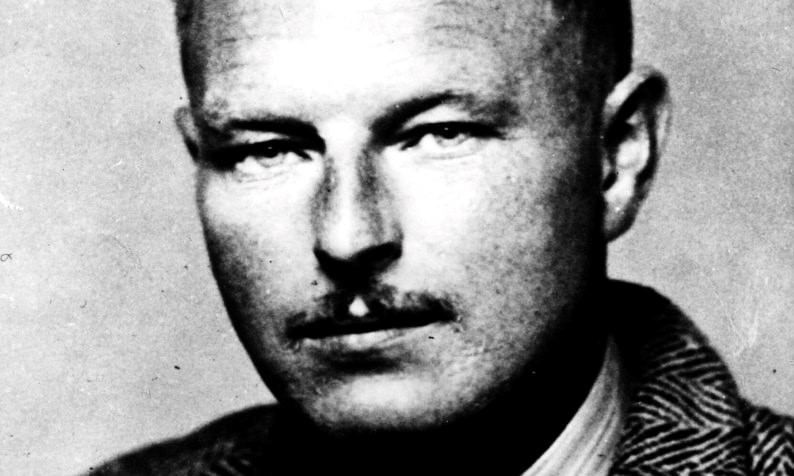
Arthur Conan Doyle (1859-1930), scozzese (foto web)
DAL MAR DEL NORD (Traduzione di Emilio Capaccio)
Le sue guance bagnate erano dagli sprizzi del Mar del Nord, andavamo dove ciottoli e marea s’incontrano; lunghe onde rotolavano da lontano facendo le fusa con arricciature ai nostri piedi. E come noi andavamo mi sembrò che tre vecchi amici si fossero rivisti quel giorno, il vecchio, vecchio cielo, il vecchio, vecchio mare, e l’amore, vecchio quanto loro. Veniva dal mare una bruma meditabonda, la vedemmo distendersi, piega su piega, e notammo il gran sole alchimista mutare tutto il suo bordo plumbeo in oro. Osservate bene, osservate bene, mia signora, il grigio sotto, l’oro sopra, solo così la vita più grigia può splendere tutta dorata in luce d’amore.
*
BY THE NORTH SEA
Her cheek was wet with North Sea spray, we walked where tide and shingle meet; the long waves rolled from far away to purr in ripples at our feet. and as we walked it seemed to me that three old friends had met that day, the old, old sky, the old, old sea, and love, which is as old as they. Out seaward hung the brooding mist we saw it rolling, fold on fold, and marked the great Sun alchemist turn all its leaden edge to gold, look well, look well, oh lady mine, the gray below, the gold above, for so the grayest life may shine all golden in the light of love.
Ella Wheeler Wilcox (1850-1919), americana (foto web)
UNA NAVE VOLGE A EST (Traduzione di Emilio Capaccio)
Una nave volge a est e un’altra volge a ovest dagli stessi venti soffiate. È l’assetto delle vele non le burrasche che indica la rotta che percorriamo. Come venti del mare sono le onde del tempo mentre attraversiamo la vita. È l’assetto dell’anima che determina il traguardo non la calma o la lotta.
*
ONE SHIP SAILS EAST
One ship sails East, And another West, By the self-same winds that blow, Tis the set of the sails And not the gales, That tells the way we go. Like the winds of the sea Are the waves of time, As we journey along through life, Tis the set of the soul, That determines the goal, And not the calm or the strife.
Salpano pensieri di ferro la sera su navi di ferro; come luci lontane, fievoli vanno mentre calano l’àncora dodici piedi, al borbottar del traghetto che come trottola, nel frangente mareale, tórno tórno fa girar la sua voce di gallo mezz’arrochita da tubi attossicati e impiumati di vapore. La nave passa. I cutter s’allontanano. Le campane battono. Il traghetto erutta un’ultima bianca frase; e labbra umane un’ultima nera, carica di benvenuti alla disfatta. Lasciano la spietata città i pensieri; però navi di ferro sono e pietà non hanno; e gli uomini di cuori e fianchi che si sforzano e arrugginiscono. Pensieri di ferro salpano nella polvere da città di ferro, però come tenere colombe i pensieri che volano a casa.
*
IRON CITIES
Iron thoughts sail out at the evening on iron ships; They move hushed as far lights while twelve footers Dive at anchor as the ferry sputters And spins like a round top, in the tide rips, Its rooster voice half muted by choked pipes Plumed with steam. The ship passes. The cutters Fall away. Bells strike. The ferry utters A last white phrase; and human lips, A last black one, heavy with welcome To loss. Thoughts leave the pitiless city, Yet ships themselves are iron and have no pity; While men have hearts and sides that strain and rust. Iron thoughts sail from the iron cities in the dust, Yet soft as doves the thoughts that fly back home.
Edmond Gore Alexander Holmes (1850-1936), irlandese (foto web)
NOTTE (Traduzione di Emilio Capaccio)
Viene la notte e le stelle continuano le consuete veglie Nelle morbide profondità insondabili del cielo: In un mistico velo d’ombrosa oscurità giacciono Le infinite distese degli abissi,— Tranne dove dormono gli argentei sentieri della luce lunare, E s’alzano e s’abbassano per sempre sognanti Col maestoso ondeggiare del mare. Viene la notte, e una decuplicata oscurità dove è ripido e tenebroso, Nelle nere acque d’una baia senza sbocco Le scogliere discendono: non c’è mai tempesta che rugge A rompere il sonno terribile; molto al di sotto brillano bianche frange schiumose come neve; E suoni di tuoni strangolati s’alzano sempre, E notturni gemiti d’onde imprigionate.
NIGHT
Night comes and stars their wonted vigils keep In soft unfathomable depths of sky: In mystic veil of shadowy darkness lie The infinite expanses of the deep,— Save where the silvery paths of moonlight sleep, And rise and sink for ever dreamily With the majestic heaving of the sea. Night comes, and tenfold gloom where dark and steep, Into black waters of a land-locked bay The cliffs descend: there never tempest raves To break the awful slumber; far below Glimmer the foamy fringes white as snow; And sounds of strangled thunder rise alway, And midnight moanings of imprisoned waves.
Amos Russel Wells (1862-1933), americano (foto web)
LA COPPA DELL’OCEANO (Traduzione di Emilio Capaccio)
Cosa contiene la coppa dell’oceano? Gloria di porpora e scintillio d’oro; I più teneri verdi e il blu del cielo, Colpiti dalla luce del sole in tutto e per tutto; Increspature che vagano oziosamente. Frangenti che cadono con schiuma galante; Sabbie e ciottoli che si rincorrono e scivolano; Correnti mistiche che scorrono dolcemente; Potente incantesimo dei tempi antichi, Questo contiene la coppa dell’oceano.
Che cosa sente la coppa dell’oceano Alle labbra della gente di terra d’ogni luogo? Il respiro minaccioso e spettrale del pericolo, le forme martoriate d’una morte atroce; Ululanti tempeste e nevischio pungente, lo schianto dei terribili piedi dei destrieri marini; Navi che tremano per l’urto spaventoso, Angoscia ammucchiata a una roccia selvaggia; Perdita, tumulto e insidia fatale, Questo fa il calice dell’oceano.
Guardate bene la coppa dell’oceano, Voi che volentieri sorbite bellezza. Soffermatevi a lungo sull’infido bordo, Guardatevi dentro ogni volta vi curvate e bevete.
*
THE CUP OF OCEAN
What does the cup of ocean hold? Glory of purple and glint of gold; Tenderest greens and heavenly blue, Shot with the sunlight through and through; Wayward ripples that idly roam. Tumbling breakers with gallant foam; Sands and pebbles that chase and slide; Mystic currents that softly glide; Mighty spell of the ages old, This does the cup of ocean hold.
What does the cup of ocean hear To the lips of land folk everywhere? Danger’s ominous, ghostly breath, Battered forms of an awful death; Howling tempests and bitter sleet, Crash of the sea steeds’ terrible feet; Ships a-quiver with fearful shock, Anguish heaped on a savage rock; Loss and turmoil and fatal snare, This does the cup of ocean bear.
Look ye well to the ocean’s cup, Ye who gladly on beauty sup. Tarry long at the treacherous brink, Gaze within e’er ye bend and drink.
R. BROOKE – Sonnet/Sonetto. Traduzione di Raffaela Fazio
SONNET
Sonnet
I said I splendidly loved you; it’s not true. Such long swift tides stir not a land-locked sea. On gods or fools the high risk falls − on you –
The clean clear bitter-sweet that’s not for me. Love soars from earth to ecstasies unwist. Love is flung Lucifer-like from Heaven to Hell. But − there are wanderers in the middle mist, Who cry for shadows, clutch, and cannot tell Whether they love at all, or, loving, whom: An old song’s lady, a fool in fancy dress, Or phantoms, or their own face on the gloom; For love of Love, or from heart’s loneliness. Pleasure’s not theirs, nor pain. They doubt, and sigh,
And do not love at all. Of these am I.
*
Sonetto
Ti professai, magnifico, il mio amore: era fasullo.
Se chiuso, non è mosso da rapide correnti il mare.
Il grande rischio grava dei o folli – tu tra quelli.
Non fa al caso mio il chiaro e netto dolce-amaro.
S’innalza dalla terra a ignote estasi l’amore,
come Lucifero scagliato dal Cielo all’Inferno.
Ma in mezzo, nella nebbia, ci sono viaggiatori
gementi per un niente; s’aggrappa a ciò che ha intorno
ognun di loro. Se ami oppur chi ami dir non sa:
se un pazzo in costume o dama di vecchia canzone,
se uno spettro o il suo stesso volto nell’oscurità,
per amor di Amore o solitudine del cuore.
Né pena né piacere gli appartiene. Di tutto
è incerto, sospira, non ama affatto. Io son sì fatto.
Raffaela Fazio (Arezzo 1971) risiede a Roma dove lavora come traduttrice. Ha trascorso dieci anni in vari paesi europei, laureandosi in lingue e politiche europee all’Università di Grenoble, e specializzandosi presso la Scuola di Interpreti e Traduttori di Ginevra. Rientrata in Italia, ha conseguito un diploma in scienze religiose e un master in beni culturali presso la Pontificia Università Gregoriana di Roma.
Nel campo dell’iconografia, ha pubblicato alcuni articoli e due guide sull’arte paleocristiana. È autrice di vari libri di poesia. Tra gli ultimi: “L’arte di cadere” (Biblioteca dei Leoni, 2015); “Ti slegherai le trecce” (Coazinzola Press, 2017); “L’ultimo quarto del giorno” (La Vita Felice, 2018); “Midbar” (Raffaelli Editore, 2019); “Tropaion” (puntoacapo Editrice, 2020); “A grandezza naturale. 2008-2018” (Arcipelago Itaca, 2020); “Meccanica dei solidi” (puntoacapo Editrice, 2021); “Un’ossatura per il volo” (Raffaelli Editore, 2021); “Gli spostamenti del desiderio” (Moretti e Vitali, 2023). Si è occupata della traduzione di Rainer Maria Rilke, in “Silenzio e Tempesta, Poesie d’amore” (Marco Saya Edizioni, 2019), di Edgar Allan Poe, in “Nevermore. Poesie di un Altrove” (Marco Saya Edizioni, 2021), di Renèe Vivien in “L’ardente agonia delle rose” (Marco Saya Edizioni, 2023) e di Rupert Brooke in “L’amore è breccia nelle mura” (puntoacapo Editrice, 2025). Nel 2021 è uscito un suo libro di brevi racconti come vincitore del primo premio Narrapoetando 2021: “Next Stop. Racconti tra due fermate” (Fara Editore, 2021).
Katharine Lee Bates (1859-1929), americana (foto web)
LUCI DI STELLE SUL MARE (Traduzione di Emilio Capaccio)
Sopra il mormorio corale delle onde lievi Le costellazioni brillano contro il tenue Crepuscolo etereo, sempre bello, in alto, Sereno, mentre l’uomo esce faticosamente dalle grotte Per le città, le città clamorose, la vita che si scatena Come un’onda contro gli scogli. Non di frequente Le nostre città scorgono le stelle, il cui splendore è stato deriso Dal basso e duro scintillio che sfida La benedizione del buio della notte. Ma qui, In mezzo all’oceano, tutte le cui voci ovattate risuonano Un’estasi perduta dalle nostre vessate volontà umane, Vediamo lo splendore primordiale che brillava Sul caos, —vediamo il giovane Dio pascere Le sue scintillanti greggi sulle purpuree colline.
*
STARLIGHT AT SEA
Over the murmurous choral of dim waves The constellations glow against the soft Ethereal dusk, —forever fair, aloft, Serene, while man climbs painfully from caves To cities, clamorous cities, life that raves Like surf against the rocks. It is not oft Our cities glimpse the stars, their luster scoffed Away by low, hard glitter that outbraves Night’s blessing of the dark. But here upon Mid-ocean, all whose muffled voices ring A rapture lost to our vexed human wills, We see the primal radiance that shone On chaos, —see the young God shepherding His gleaming flocks on the empurpled hills.
UNA MEMORIA DEL MARE (Traduzione di Emilio Capaccio)
O cielo e mare, e verso di chiurlo, Il sonoro scampanio dell’onda sull’onda, Perle di sogno che il più fondo oceano pavimenta, La potente meraviglia su tutto!
Il vasto, vasto mare dove cavalcano grandi navi, La brezza aperta con pieno respiro, La pallida schiuma atterrita dalla tempesta, I tristi cancelli del cielo spalancati!
*
A SEA-MEMORY
O sky and sea, and curlew call, The tinkling chime of wave on wave, Dream-pearls that deepest ocean pave, The mighty wonder over all!
The wide, wide sea, where great ships ride, The open breeze with breath full drawn, Pale foam by tempest frightened on, Grim flood-gates of the sky flung wide!
Arthur Williams Symons (1865-1945), gallese (foto web)
PRIMA DELLA TEMPESTA (Traduzione di Emilio Capaccio)
Il vento s’alza sul mare, saltano le bianche e battute schiume ballerine; e il mare geme con malessere, e torna a dormire, e non può dormire.
La cresta dietro il dorsale roccioso si solleva, mani selvagge, e martelli sulla terra, si disperde in polvere liquida alla deriva verso la morte tra la sabbia polverosa.
Sulla linea dell’orizzonte che s’avvicina, dove il cielo poggia un muro visibile, bigio alla vista, io divinizzo, le vele che volano prima della tempesta.
*
BEFORE THE SQUALL
The wind is rising on the sea, the windy white foam-dancers leap; and the sea moans uneasily, and turns to sleep, and cannot sleep.
Ridge after rocky ridge uplifts, wild hands, and hammers at the land, scatters in liquid dust, and drifts to death among the dusty sand.
On the horizon’s nearing line, where the sky rests a visible wall, grey in the offing, I divine, the sails that fly before the squall.
Christina Georgina Rossetti (1830-1894), inglese (foto web)
DAL MARE (Traduzione di Emilio Capaccio)
Perché il mare geme sempre? Escluso dal cielo, emette il suo lamento. S’agita contro il bordo della riva; Tutti i fiumi in piena della terra non possono riempire Il mare, che beve e ha ancora sete.
Puri miracoli di bellezza giacciono nascosti nel suo letto non visti: Anemoni, salsi, senza passione, Come fiori respirano; sono vivi quanto basta per respirare, moltiplicarsi e prosperare.
Gusci pittoreschi, curvi, a chiazze, a punte, cose vive incrostate con occhi da argo, tutti belli e uguali, ma tutti diversi, nascono senza dolore e muoiono senza dolore, —e così passano.
*
BY THE SEA
Why does the sea moan evermore? Shut out from heaven it makes its moan. It frets against the boundary shore; All earth’s full rivers cannot fill The sea, that drinking thirsteth still.
Sheer miracles of loveliness Lie hid in its unlooked-on bed: Anemones, salt, passionless, Blow flower-like; just enough alive To blow and multiply and thrive.
Shells quaint with curve, or spot, or spike, Encrusted live things argus-eyed, All fair alike, yet all unlike, Are born without a pang, and die Without a pang,—and so pass by.
William Stanley Braithwaite (1878-1962), americano (foto web)
VOCE DEL MARE (Traduzione di Emilio Capaccio)
Voce del mare che mi chiami, Cuore dei boschi che il mio cuore ama, Sono parte del vostro mistero. Mosso dall’anima che la vostr’anima muove.
Sogno di stelle nella cupola del mare notturno, Da qualche parte nel vostro spazio infinito Dopo gli anni tornerò alla dimora, Alle vostre sale per reclamare il mio posto.
*
VOICE OF THE SEA
Voice of the sea that calls to me, Heart of the woods my own heart loves, I am part of your mystery— Moved by the soul your own soul moves.
Dream of the stars in the night-sea’s dome, Somewhere in your infinite space After the years I will come home, Back to your halls to claim my place.
Thomas Bailey Aldrich (1836-1907), americano (foto web)
LA VOCE DEL MARE (Traduzione di Emilio Capaccio)
Nel silenzio della notte autunnale Sento la voce del mare, Nel silenzio della notte autunnale Sembra che dica— Miei son i venti in alto, Mie le spelonche di sotto, Miei i morti di ieri E i morti di tanto tempo fa!
E penso alla flotta che salpò Dalla bella riva di Gloucester, Penso alla flotta che salpò E non tornò mai più! I miei occhi son pieni di lacrime, E il mio cuore intorpidito di dolore— Sembra come fosse ieri, E tutto è successo tanto tempo fa!
*
THE VOICE OF THE SEA
In the hush of the autumn night I hear the voice of the sea, In the hush of the autumn night It seems to say to me— Mine are the winds above, Mine are the caves below, Mine are the dead of yesterday And the dead of long ago!
And I think of the fleet that sailed From the lovely Gloucester shore, I think of the fleet that sailed And came back nevermore! My eyes are filled with tears, And my heart is numb with woe— It seems as if ‘t were yesterday, And it all was long ago!
Illustro l’argenteo passaggio d’una nave di notte, Il colpo d’ogni triste onda perduta, Il rombo calante dell’acciaio che si sforza, Il piccolo grido d’un uomo a un uomo, Un’ombra che cade nella notte più grigia, E il tramonto della piccola stella; Poi la distesa, la lontana distesa d’acque, E la soffice sferzata d’onde nere Per lungo tempo, in solitudine.
*
BLACK WAVES
I explain the silvered passing of a ship at night, The sweep of each sad lost wave, The dwindling boom of the steel thing’s striving, The little cry of a man to a man, A shadow falling across the greyer night, And the sinking of the small star; Then the waste, the far waste of waters, And the soft lashing of the black waves For long and in loneliness.
Nathaniel Hawthorne (1804-1864), americano (foto web)
L’OCEANO (Traduzione di Emilio Capaccio)
L’oceano ha le sue grotte silenziose, Profonde, quiete e solitarie; Anche se c’è furia sulle onde, Sotto di loro non c’è nessuno. I terribili spiriti degli abissi Hanno lì la loro comunione; E ci sono quelli per cui piangiamo, I giovani, i brillanti, i giusti. I marinai stanchi riposano tranquilli Sotto il loro mare blu. Le oceaniche solitudini sono benedette, Perché laggiù c’è purezza. La terra ha colpa, la terra ha affanno, Le sue tombe sono inquiete; Ma il placido sonno è sempre lì, Sotto le onde blu scuro.
*
THE OCEAN
The Ocean has its silent caves, Deep, quiet, and alone; Though there be fury on the waves, Beneath them there is none. The awful spirits of the deep Hold their communion there; And there are those for whom we weep, The young, the bright, the fair. Calmly the wearied seamen rest Beneath their own blue sea. The ocean solitudes are blest, For there is purity. The earth has guilt, the earth has care, Unquiet are its graves; But peaceful sleep is ever there, Beneath the dark blue waves.
Calarmi ancora nei mari, nel solitario mare e nel cielo, E tutto ciò che chiedo è un’alta nave e una stella per condurla, La gioia del timone, la canzone del vento, il tremolio della vela, Una nebbia grigia sul volto marino e una grigia alba nascente.
Calarmi ancora nei mari, perché il richiamo della corrente È un chiaro e selvaggio richiamo che non può essere negato; E tutto ciò che chiedo è un giorno di vento con bianche nubi volanti, Con spruzzi e spume sollevate e gabbiani che gridano.
Calarmi ancora nei mari, alla vita zingara e vagabonda, Sulla via di gabbiani e balene, dove il vento è un coltello affilato; E tutto ciò che chiedo è un’allegra storia da un ridente compagno, E un sonno tranquillo e un dolce sogno per quando il gioco è finito.
*
SEA FEVER
I must go down to the seas again, to the lonely sea and the sky, And all I ask is a tall ship and a star to steer her by, And the wheel’s kick and the wind’s song and the white sail’s shaking, And a grey mist on the sea’s face, and a grey dawn breaking.
I must go down to the seas again, for the call of the running tide Is a wild call and a clear call that may not be denied; And all I ask is a windy day with the white clouds flying, And the flung spray and the blown spume, and the sea-gulls crying.
I must go down to the seas again, to the vagrant gypsy life, To the gull’s way and the whale’s way, where the wind’s like a whetted knife; And all I ask is a merry yarn from a laughing fellow-rover, And quiet sleep and a sweet dream when the long trick’s over.
Ronald de Carvalho (1893-1935), brasiliano (foto web)
IL MERCANTE D’ARGENTO, ORO E SMERALDO (Traduzione di Emilio Capaccio)
Odora il mare! Odora il mare! Le reti pesanti battono come ali, le reti umide palpitano nel crepuscolo. La spiaggia liscia è una scintillazione di scaglie.
Saltellano nere razze nell’oro della sabbia bagnata, l’acciaio delle muggini luccica in mani d’ebano e di bronzo.
Muscoli, pinne, voci e fragori, tutto si mischia, tutto si mischia nel crearsi della schiuma che ferve tra gli scogli.
Odora il mare!
Il corno della luna nuova gioca sulla cresta dell’onda. E tra le alghe molli e i villosi molluschi, dove si trascinano granchi dalle zampe denticolate e dove bolle l’olio gelatinoso dei flessili calamari, nella rete immensa della notte carica di stelle, nella melodia libera delle acque e dello spazio, invasa d’aria, profetica, timpanica, scoppia orgogliosamente la chiacchera d’un piovanello…
*
O MERCADOR DE PRATA, DE OURO E ESMERALDA
Cheira a mar! cheira a mar! As redes pesadas batem como asas, as redes úmidas palpitam no crepúsculo. A praia lisa é uma cintilação de escamas.
Pulam raias negras no ouro da areia molhada, o aço das tainhas faísca em mãos de ébano e bronze. Músculos, barbatanas, vozes e estrondos, tudo se mistura, tudo se mistura no criar da espuma que ferve nas pedras.
Cheira a mar!
O corno da lua nova brinca na crista da onda. E entre as algas moles e os peludos mariscos, onde se arrastam caranguejos de patas denticuladas e onde bole o óleo gelatinoso das lulas flexíveis, diante de rede imensa na noite carregada de estrelas, na livre melodia das águas e do espaço, entupido de ar, profético, timpânico, estoura orgulhosamente o papo dum baiacu…
IN MEZZO ALL’OCEANO IN TEMPO DI GUERRA (Traduzione di Emilio Capaccio)
Il fragile splendore del mare piatto, Il volto sereno e d’argento velato della luna, Fanno di questa nave un luogo incantato Piena di chiara allegria e dorata magia. Ora, per un po’, la risata spensierata sarà Mescolata al canto, per dargli più dolce grazia, E le vecchie stelle, nella loro corsa infinita, Daranno ascolto e invidieranno la giovane umanità.
Eppure questa sera, a cento leghe di distanza, Queste acque arrossano d’uno strano e terribile rosso. Prima della luna, una nube oscenamente grigia Sorge da ponti schiantati nel piombo aereo. E queste stelle sorridono col loro modo immemorabile Sulle onde che ricadono su mille nuovi morti!
*
MID-OCEAN IN WAR TIME
The fragile splendour of the level sea, The moon’s serene and silver-veiled face, Make of this vessel an enchanted place Full of white mirth and golden sorcery. Now, for a time, shall careless laughter be Blended with song, to lend song sweeter grace, And the old stars, in their unending race, Shall heed and envy young humanity.
And yet to-night, a hundred leagues away, These waters blush a strange and awful red. Before the moon, a cloud obscenely grey Rises from decks that crash with flying lead. And these stars smile their immemorial way On waves that shroud a thousand newly dead!
Il testo inedito è tratto da “Canto di misconosciuta gloria“, in preparazione dalle Edizioni Multimedia di Salerno, nella traduzione dal greco di Maria Allo.










 LIMINA MUNDI