“Sussurri d’Altrove – Ritratti” di Emilio Capaccio
Il mio cuore è diventato duro come una strada di città,
i cavalli lo calpestano, canta come il ferro,
per tutto il giorno e la la notte battono,
risuonano come gli zoccoli del tempo.
C. A.
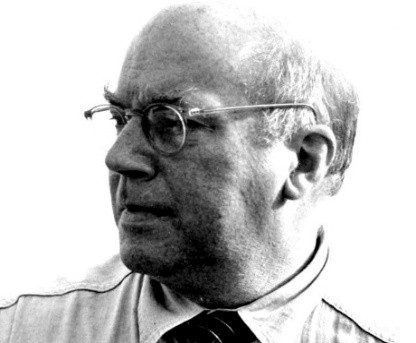
Conrad Aiken (1889–1973) è stato un poeta, narratore e critico letterario statunitense, considerato una delle voci più intense e introspettive del modernismo americano. La sua opera è profondamente legata alla sua esperienza personale e si distingue per l’attenzione ai processi mentali, alle emozioni e ai conflitti interiori dell’individuo moderno.
Aiken nacque a Savannah, in Georgia, in un contesto familiare segnato da forti tensioni. L’evento più drammatico della sua vita avvenne durante l’infanzia: quando aveva undici anni, il padre uccise la madre e poi si tolse la vita. Questo trauma ebbe un impatto decisivo sulla sua formazione psicologica e artistica, influenzando in modo diretto i temi della sua produzione letteraria. Il senso di perdita, la colpa, la paura e la frammentazione dell’io diventano infatti elementi ricorrenti nelle sue poesie e nei suoi racconti.
Dopo la tragedia, Aiken fu mandato a vivere presso parenti e successivamente si trasferì nel Nord degli Stati Uniti per studiare. Frequentò l’Università di Harvard, dove entrò in contatto con un ambiente culturale estremamente stimolante. Qui conobbe T.S. Eliot, con il quale instaurò un rapporto di amicizia e confronto intellettuale. Gli anni universitari furono fondamentali per la sua formazione: Aiken si interessò alla filosofia, alla musica e soprattutto alla psicoanalisi, che in quegli anni stava emergendo come nuova chiave di lettura della mente umana.
La sua carriera letteraria fu ampia e diversificata. Aiken scrisse poesie, romanzi, racconti e saggi critici, ma è soprattutto come poeta che viene ricordato. La sua poesia si concentra meno sulla descrizione del mondo esterno e più sull’analisi dei movimenti interiori della coscienza. I suoi testi spesso rappresentano flussi di pensiero, percezioni soggettive e stati emotivi complessi, anticipando alcune tecniche che diventeranno centrali nella letteratura modernista.
Dal punto di vista stilistico, Aiken attribuiva grande importanza alla musicalità del verso. Riteneva che la poesia dovesse possedere un ritmo capace di rispecchiare il funzionamento della mente umana. Per questo motivo, pur sperimentando nuove forme, non abbandonò completamente la tradizione poetica.
La sua scrittura si colloca, quindi, in una posizione intermedia tra innovazione e continuità, distinguendosi sia dalla poesia più tradizionale del ‘900, sia dalle avanguardie più radicali.
Alcuni critici fanno confluire Aiken nella corrente dell’immaginismo di Ezra Pound e Richard Aldington, a causa di alcune peculiarità della sua scrittura, quali lo sforzo di trasmettere emozioni senza eccessive definizioni nei versi, l’utilizzo di immagini precise e concrete, talvolta ispirate a oggetti quotidiani. Tuttavia, Aiken non dichiarò mai di sentirsi vicino all’immaginismo e, inoltre, a differenza degli immaginisti che puntavano a un’oggettività quasi fotografica, Aiken, nei suoi versi, filtrava l’immagine attraverso la propria percezione emotiva e psicologica.
Nel 1930 ottenne il Premio Pulitzer per la poesia con l’opera Selected Poems. Nonostante il successo, rimase una figura relativamente appartata nel panorama letterario americano.
La sua personalità introversa e la complessità della sua opera contribuirono a renderlo meno popolare rispetto ad altri autori modernisti, ma non meno rilevante dal punto di vista artistico.
Anche la sua vita privata fu segnata da instabilità. Ebbe diversi matrimoni e attraversò periodi di profonda crisi emotiva, che rifletterono la difficoltà di superare i traumi dell’infanzia. Tuttavia, proprio questa inquietudine alimentò la sua attività creativa, trasformando il dolore personale in materia letteraria.
Negli ultimi anni, visse tra gli Stati Uniti e l’Europa, continuando a scrivere. Morì nel 1973, lasciando un’eredità letteraria complessa ma di grande valore.
Cenni critici-biografici e traduzioni di Emilio Capaccio
Cadeva una stella e un’altra
Cadeva una stella e un’altra mentre camminavamo.
Alzando la mano verso ovest, egli disse ―
― Com’è prodigo quel cielo delle sue stelle!
Cadono e cadono, e il cielo resta cielo.
Altre due sono andate, ma il firmamento resta firmamento.
Non siamo dunque avari dei nostri pensieri,
Né delle nostre parole, né accumuliamoli come se
Pensassimo che le nostre menti fossero un cielo che potesse mutare
E perdere la sua virtù, quando una parola fosse caduta.
Siamo prodighi come il cielo:
Perdiamo ciò che c’è da perdere, e diamo ciò che possiamo dare ―
Siamo sempre gli stessi. Avete smarrito un pianeta —?
Perduto Saturno? Che porti allora i suoi anelli
Nel limbo delle cose dimenticate.
O piccoli vanitosi dell’orgoglio della mente
Che avvolgete la frase nella lavanda e la conservate
Al fine di poterla mostrare: e voi, che risparmiate i nostri amori
Come se non avessimo abbastanza mondi d’amore —!
Siamo sconsiderati con le nostre parole e con i nostri mondi,
Spendiamoli liberamente come l’albero con le sue foglie;
E doniamoli là dove il dono è più benedetto.
Per cosa dovremmo trattenerli — per una notte di gelo?…
Tutto sarebbe perduto invano e noi stessi un fantasma.
One star fell and another
One star fell and another as we walked.
Lifting his hand towards the west, he said ―
— How prodigal that sky is of its stars!
They fall and fall, and still the sky is sky.
Two more have gone, but heaven is heaven still.
Then let us not be precious of our thought,
Nor of our words, nor hoard them up as though
We thought our minds a heaven which might change
And lose its virtue, when the word had fallen.
Let us be prodigal, as heaven is:
Lose what we lose, and give what we may give,―
Ourselves are still the same. Lost you a planet —?
Is Saturn gone? Then let him take his rings
Into the Limbo of forgotten things.
O little foplings of the pride of mind,
Who wrap the phrase in lavender, and keep it
In order to display it: and you, who save our loves
As if we had not worlds of love enough —!
Let us be reckless of our words and worlds,
And spend them freely as the tree his leaves;
And give them where the giving is most blest.
What should we save them for, — a night of frost?…
All lost for nothing, and ourselves a ghost.
( Collected Poems of Conrad Aiken, 1953 )
Moltitudini che si muovono nell’oscurità
Le porte socchiuse da cui sentivamo quella musica
Ora si chiudono piano. I corni sussurrano fino al silenzio,
Le stelle si dispiegano, la notte si fa profonda.
L’oscurità si posa su di noi; un vago ritornello
Stuzzica assonnato l’assonnato cervello.
In innumerevoli stanze ci stendiamo e dormiamo.
Dove siamo stati? Quale selvaggio caos di musica
Vortica nei nostri sogni? Ci alziamo improvvisi nell’oscurità,
Sgraniamo gli occhi, gridiamo e ci riaddormentiamo.
Sogniamo d’essere infinite onde che spumeggiano languidamente
Su una calda riva bianca illuminata dalla luna;
O nuvole trascinate dal vento in un cielo di mezzanotte,
O accordi musicali dispersi nella fuggente oscurità,
O suono cantilenante della pioggia.
Sgraniamo gli occhi e fissiamo l’avvolgente oscurità,
E torniamo un’altra volta nei sogni.
Multitudes turn in darkness
The half-shut doors through which we heard that music
Are softly closed. Horns mutter down to silence,
The stars wheel out, the night grows deep.
Darkness settles upon us; a Vague refrain
Drowsily teases at the drowsy brain.
In numberless rooms we stretch ourselves and sleep.
Where have we been? What savage chaos of music
Whirls in our dreams? We suddenly rise in darkness,
Open our eyes, cry out, and sleep once more.
We dream we are numberless sea-waves, languidly foaming
A warm white moonlit shore;
Or clouds blown windily over a sky at midnight,
Or chords of music scattered in hurrying darkness,
Or a singing sound of rain
We open our eyes and stare at the coiling darkness,
And enter our dreams again.
( Poetry; A magazine of Verse, vol. 14, No. 5, August 1919 )
Bussate alla porta
Bussate alla porta, e avrete una risposta!
Aprite le pesanti mura per liberarmi,
E suonate un corno per chiamarmi alla luce del sole,
E, stupiti, che strana cosa vedrete!
Suore, assassini e ubriaconi, santi e peccatori,
Amanti e ballerine, saggi e pagliacci
Vi rideranno addosso, e non mi troverete da nessuna parte…
Io sono una stanza, una casa, una strada, una città.
Knock on the door
Knock on the door, and you shall have an answer!
Open the heavy walls to set me free,
And blow a horn to call me into the sunlight,
And startled then what a strange thing you shall see!
Nuns, murderers, and drunkards, saints and sinners,
Lover and dancing girl and sage and clown
Will laugh upon you, and you will find me nowhere…
I am a room, a house, a street, a town.
( Senlin: His Futile Preoccupations, First section. Fourth part, in The Charnel Rose, Senlin: A Biography and Other Poems, 1918 )
Il rifiuto
Seduta in un bar e guardandosi nello specchio
Mentre fumava una sigaretta o beveva caffè,
Rise freddamente della delusione dell’uomo…
Lui posò la sigaretta nel piattino,
E impassibile nella disperazione
Poggiò i gomiti sul tavolo, passandosi le dita tra i capelli.
Osservando come le sue labbra s’increspavano, opache nello specchio,
Per incontrare la punta dorata tra le dita,
Mentre la sigaretta si avvicinava a loro nella sua mano:
Gli disse che era gravemente in errore…
E notando nel riflesso il movimento di quelle labbra,
Le parve strano — così disse —
Che, malgrado tutti i suoi avvertimenti, lui avesse perso la testa.
Proprio mentre lei accennava a sorridere, la musica chiassosa cominciò;
Tamburellò a ritmo con le dita sulla tovaglia…
Quei suoi occhi azzurri erano così gelidi?
Come, altrimenti, avrebbe potuto non trovarlo attraente?
Le donne allora erano diverse
Da questi uomini egoisti appassionati e inspiegabilmente infantili…
Si alzò e gli prese il braccio; lentamente camminarono insieme
Attraverso il labirinto dei tavoli, tra la gente che beveva,
Verso il vuoto battuto dal vento e dalla pioggia…
E nel taxi, seduta nel buio accanto a lui,
Si mosse, sfiorò il suo ginocchio,
E quando lui la baciò, lo odiò, ma lo baciò, appassionatamente.
The rejection
Sitting in a café, and watching her reflection
Smoke a cigarette, or drinking coffee,
She laughed hard-heartedly at his dejection…
He laid his cigarette down in his saucer,
And stolid with despair
Put his elbows on the table, ran his fingers through his hair.
Watching how her lips primmed, dusty in the mirror,
To meet the gilded tip between her fingers,
As the cigarette approached them in her hand:
She told him he was seriously in error…
And noticing how her lips moved, in reflection,
She thought it queer, she said,
That in spite of all her warnings he should go and lose his head.
Just as she was smiling, the noisy music started;
She tapped upon the tablecloth in rhythm…
Were those blue eyes of hers so icy-hearted?
How as it, otherwise, she could not like him?
Women were different, then,
From these strangely childlike passionate selfish men…
She rose and took his arm; they slowly walked together
Out through the maze of tables, people drinking,
Into the windy void of rainy weather…
And in the taxi, sitting dark beside him,
She moved, and touched his knee,
And when he kissed her, hated him, but kissed him, passionately.
Annichilimento
Mentre il mezzogiorno blu si inarca su di noi,
E il pioppo perde foglie sconsolate,
Dimmi ancora perché l’amore incanta,
E cosa l’amore dona.
È il dito tremante che traccia
La curva delle sopracciglia, la curva della guancia?
È la bocca che freme quando la mano accarezza
Ma non può parlare?
No, non in questi, non in questi è nascosto
Il segreto, più che in altre cose:
Non solo il tocco di una mano può rallegrare
Finché il sangue canta.
È la foglia che cade tra noi,
Le campane che mormorano, le ombre che si muovono,
La luce autunnale che svanisce su di noi:
Queste cose sono l’amore.
È il “No, restiamo qui ancora un po’”,
“Aspetta fino a domani”, “Una volta conoscevo —”
Queste sciocchezze, dette mentre ti sfioro il dito,
E l’orologio segna le due.
Il mondo è intricato e noi non siamo nulla.
È il complesso mondo dell’erba,
Un ramoscello sul sentiero, uno sguardo di disprezzo,
Sentimenti che passano —
Questi sono il segreto! E io potrei odiarti,
Quando, curvandomi per un altro bacio,
Vedo nei tuoi occhi che non ti incontro,
E che l’amore è questo.
La roccia che si unisce alla roccia può conoscere l’amore
Meglio degli occhi che fissano o delle labbra che si toccano.
Tutto ciò che conosciamo nell’amore è amaro,
E poco è cio che resta.
Annihilation
While the blue noon above us arches,
And the poplar sheds disconsolate leaves,
Tell me again why love bewitches,
And what love gives.
It is the trembling finger that traces
The eyebrow’s curve, the curve of the cheek?
The mouth that quivers, when the hand caresses,
But cannot speak?
No, not these, not in these is hidden
The secret, more than in other things:
Not only the touch of a hand can gladden
Till the blood sings.
It is the leaf that falls between us,
The bells that murmur, the shadows that move,
The autumnal sunlight that fades upon us:
These things are love.
It is the ‘No, let us sit here longer,’
The ‘Wait till tomorrow,’ the ‘Once I knew —’
These trifles, said as I touch your finger,
And the clock strikes two.
The world is intricate, and we are nothing.
It is the complex world of grass,
A twig on the path, a look of loathing,
Feelings that pass —
These are the secret! And I could hate you,
When, as I lean for another kiss,
I see in your eyes that I do not meet you,
And that love is this.
Rock meeting rock can know love better
Than eyes that stare or lips that touch.
All that we know in love is bitter,
And it is not much.
( John Deth, a Metaphysical Legend: And Other Poems, 1930 )
La stanza
Attraverso quella finestra — tutto il resto estinto
Tranne lei e me — vidi la lotta
Dell’oscurità contro l’oscurità. Dentro la stanza
Girava e rigirava, piombava verso il basso. Poi vidi
Come l’ordine potesse diventare — se il caos lo volesse:
E vidi l’oscurità schiacciarsi su se stessa,
Contrarsi con forza; era come se
Si uccidesse, lentamente: e con grande dolore.
Dolore. La scena era dolore, nient’altro che dolore.
Che altro, quando il caos richiama tutte le forze all’interno
per plasmare una singola foglia?…
Difatti la foglia venne
Da sola e splendente nella stanza vuota;
E subito dopo il ramoscello discese da essa;
E dal ramoscello un ramo; e poi il tronco,
Massiccio e grezzo; e infine l’unica radice nera.
La radice nera incrinò i muri. I rami sfondarono
la finestra:
Il grande albero prese possesso.
Albero degli alberi!
Ricorda (quando verrà il tempo) come morì il caos
Per dare forma alla foglia splendente. Poi volgiti, abbi coraggio,
Intreccia braccia e radici insieme, sii scosso
Dal dolore e riporta il caos informe.
Io starò a guardare allora come guardo ora.
Ora lodo l’oscurità, ma poi la foglia.
The room
Through that window — all else being extinct
Except itself and me — I saw the struggle
Of darkness against darkness. Within the room
It turned and turned, dived downward. Then I saw
How order might — if chaos wished — become:
And saw the darkness crush upon itself,
Contracting powerfully; it was as if
It killed itself, slowly: and with much pain.
Pain. The scene was pain, and nothing but pain.
What else, when chaos draws all forces inward
To shape a single leaf?…
For the leaf came
Alone and shining in the empty room;
After a while the twig shot downward from it;
And from the twig a bough; and then the trunk,
Massive and coarse; and last the one black root.
The black root cracked the walls. Boughs burst
the window:
The great tree took possession.
Tree of trees!
Remember (when time comes) how chaos died
To shape the shining leaf. Then turn, have courage,
Wrap arms and roots together, be convulsed
With grief, and bring back chaos out of shape.
I will be watching then as I watch now.
I will praise darkness now, but then the leaf.
( John Deth, a Metaphysical Legend: And Other Poems, 1930 )
Rosso è il colore del sangue
Rosso è il colore del sangue, e io lo cercherò:
L’ho cercato nell’erba.
È il colore del sole a picco visto dalle palpebre.
È nascosto sotto la carne morbida delle donne—
Scorre lì, quietamente scorre.
Sale dal cuore alle tempie, alla bocca che canta—
Come la linfa fredda sale alla rosa.
Sono confuso in ragnatele e nodi scarlatti
Tessuti dall’oscurità;
O trasportati dalla bocca di ragni assetati.
Follia per il rosso! Divoro le foglie dell’autunno.
Sono stanco del verde del mondo.
Io stesso sono una bocca per il sangue…
Qui, nella foschia dorata del sole obliquo,
Camminiamo, con la luce negli occhi,
Verso una sola panchina predeterminata fin dall’inizio.
Guarda: ci sono gabbiani nei cieli di questa città,
Che si stagliano contro l’azzurro.
Ma non penso ai gabbiani, penso a te.
I tuoi occhi, con il sole che vi tramonta,
Sono come pozze azzurre abbagliate da petali gialli.
Questo verde pallido gli si addice.
Ecco il tuo dito, con uno smeraldo:
Quello che ti ho dato. Dico queste cose con gentilezza…
Ma cosa penso sotto sotto, chi può dirlo?
Perché penso a te, accartocciata contro un candore;
Scorticata e lacerata, con un viso spento.
Penso a te, che scrivi, una cosa scarlatta,
E me stesso, che mi innalzo rosso da quell’abbraccio.
Il sole di novembre è luce versata attraverso il miele:
Le cose vecchie, in una luce simile, diventano sottili e fini.
Le querce spoglie sono come fuoco immobile.
Parlami: ora beviamo il vino della sera.
Guarda, come le nostre ombre strisciano lungo la tomba!—
E da questa parte, come la ghiaia comincia a brillare!
Questo è il tempo della giornata per i ricordi,
Per i rimpianti sentimentali, le allusioni oblique,
Petali di rosa avvizziti in un vaso ammuffito.
Spargili al vento! Stanno arrivando le tempeste.
È buio, con una stella ventosa.
Se le bocche umane fossero davvero rose, mia cara, –
(Perché dobbiamo legare le cose in questo modo?—)
Strapperei la tua rosa petalo dopo petalo con un lento omicidio.
Strapperei gli stami, i pistilli,
L’oro e il verde,—
Spargendo la sottile dolcezza che era il tuo respiro
Su una fredda ondata di morte…
Ora torniamo indietro, lentamente, come siamo venuti.
Illumineremo la stanza con le candele; potrebbero brillare
Come file di occhi gialli.
I tuoi capelli sono come fuoco filato, alla luce delle candele.
Mi sorridi, non dici nulla. Sei saggia.
Perché penso a te, gettata in una brutale oscurità;
Schiacciata e rossa, con il volto pallido.
Penso a te, con i capelli spettinati e grondanti.
E me stesso, che mi innalzo rosso da quell’abbraccio.
Red is the color of blood
Red is the color of blood, and I will seek it:
I have sought it in the grass.
It is the color of steep sun seen through eyelids.
It is hidden under the suave flesh of women—
Flows there, quietly flows.
It mounts from the heart to the temples, the singing mouth—
As cold sap climbs to the rose.
I am confused in webs and knots of scarlet
Spun from the darkness;
Or shuttled from the mouths of thirsty spiders.
Madness for red! I devour the leaves of autumn.
I tire of the green of the world.
I am myself a mouth for blood…
Here, in the golden haze of the late slant sun,
Let us walk, with the light in our eyes,
To a single bench from the outset predetermined.
Look: there are seagulls in these city skies,
Kindled against the blue.
But I do not think of the seagulls, I think of you.
Your eyes, with the late sun in them,
Are like blue pools dazzled with yellow petals.
This pale green suits them well.
Here is your finger, with an emerald on it:
The one I gave you. I say these things politely—
But what I think beneath them, who can tell?
For I think of you, crumpled against a whiteness;
Flayed and torn, with a dulled face.
I think of you, writing, a thing of scarlet,
And myself, rising red from that embrace.
November sun is sunlight poured through honey:
Old things, in such a light, grow subtle and fine.
Bare oaks are like still fire.
Talk to me: now we drink the evening’s wine.
Look, how our shadows creep along the grave!—
And this way, how the gravel begins to shine!
This is the time of day for recollections,
For sentimental regrets, oblique allusions,
Rose-leaves, shrivelled in a musty jar.
Scatter them to the wind! There are tempests coming.
It is dark, with a windy star.
If human mouths were really roses, my dear,—
(Why must we link things so?—)
I would tear yours petal by petal with slow murder.
I would pluck the stamens, the pistils,
The gold and the green,—
Spreading the subtle sweetness that was your breath
On a cold wave of death….
Now let us walk back, slowly, as we came.
We will light the room with candles; they may shine
Like rows of yellow eyes.
Your hair is like spun fire, by candle-flame.
You smile at me—say nothing. You are wise.
For I think of you, flung down brutal darkness;
Crushed and red, with pale face.
I think of you, with your hair disordered and dripping.
And myself, rising red from that embrace.
( The Charnel Rose, 1918 )
Amata, lodiamo ancora una volta la pioggia
Amata, lodiamo ancora una volta la pioggia.
Scopriamo un nuovo alfabeto,
per questa, tanto lodata; e diventiamo noi stessi,
la pioggia, il centocchio e la foglia di bardana,
il fiore bianco-verde del ligustro, la pietra maculata,
e tutto ciò che accoglie la pioggia; anche il passero, —
che osserva con occhio severo dal suo nascondiglio,
sotto il ramo dell’olmo, finché la pioggia non cessa.
C’è un rigogolo che, a testa in giù,
pende dal suo nido e agita un’ala arancione, —
sotto un albero morto e immobile come il piombo;
c’è una sola foglia, in tutto questo cielo
di foglie, che la pioggia ha staccato dal ramo:
il picciolo si spezza, ed essa cade, ma viene trattenuta
da una foglia sorella, e così resta sospesa;
c’è una coppa di ghianda, accanto a un fungo
che raccoglie tre gocce dalla nube china.
La timida ape ritorna all’alveare; la mosca
sotto l’ampia foglia della malvarosa
resta stordita dal freddo; la lumaca intrisa di pioggia
osserva il mondo acquoso da una pietra bagnata…
E ancora le sillabe dell’acqua sussurrano:
la ruota delle nuvole gira lenta: mentre attendiamo
nella stanza buia; e nel tuo cuore trovo
una goccia argentea di pioggia, —su una foglia di biancospino, —
Orione in una ragnatela, e il Mondo.
Beloved, Let Us Once More Praise The Rain
Beloved, let us once more praise the rain.
Let us discover some new alphabet,
For this, the often praised; and be ourselves,
The rain, the chickweed, and the burdock leaf,
The green-white privet flower, the spotted stone,
And all that welcomes the rain; the sparrow too, —
Who watches with a hard eye from seclusion,
Beneath the elm-tree bough, till rain is done.
There is an oriole who, upside down,
Hangs at his nest, and flicks an orange wing, —
Under a tree as dead and still as lead;
There is a single leaf, in all this heaven
Of leaves, which rain has loosened from its twig:
The stem breaks, and it falls, but it is caught
Upon a sister leaf, and thus she hangs;
There is an acorn cup, beside a mushroom
Which catches three drops from the stooping cloud.
The timid bee goes back to the hive; the fly
Under the broad leaf of the hollyhock
Perpends stupid with cold; the raindark snail
Surveys the wet world from a watery stone…
And still the syllables of water whisper:
The wheel of cloud whirs slowly: while we wait
In the dark room; and in your heart I find
One silver raindrop, —on a hawthorn leaf, —
Orion in a cobweb, and the World.
( Preludes for Memnon, 1931 )
Improvvisazioni: Luce e Neve: 12
Quante volte siamo stati interrotti
proprio mentre stavo per inventarti una storia!
Una volta fu perché all’improvviso vedemmo una lucciola
accendere la sua lanterna verde tra i rami di un abete.
Meraviglia! Meraviglia! Si andava costruendo
una piccola tenda di luce nell’oscurità!
E una volta fu perché vedemmo un lampo color lillà
serpeggiare fino alla cima azzurra della montagna, —
sentimmo massi di tuono rotolare verso di noi
e il ticchettio delle gocce sul vetro,
e corremmo a guardare la pioggia
avanzare in nubi ondeggianti sopra l’erba alta del campo!
Oppure altre volte fu perché vedemmo una stella
scivolare leggera fuori dal cielo e cadere, lontano,
tra colline scure di pini;
o perché trovammo un tritone color cremisi
guizzare nell’erba fredda!
Queste cose ci interruppero e ci lasciarono pieni di domande;
e le storie, qualunque esse fossero,
non furono mai raccontate.
Una fata, che annoda una margherita e ride?
Una principessa dai capelli d’oro impigliata in una ragnatela?
Una storia d’amore di tanto tempo fa?
Un giorno, proprio mentre ricominciamo,
proprio mentre soffiamo la prima dolce nota,
la morte stessa ci interromperà.
Improvisations: Light And Snow: 12
How many times have we been interrupted
Just as I was about to make up a story for you!
One time it was because we suddenly saw a firefly
Lighting his green lantern among the boughs of a fir-tree.
Marvellous! Marvellous! He is making for himself
A little tent of light in the darkness!
And one time it was because we saw a lilac lightning flash
Run wrinkling into the blue top of the mountain, —
We heard boulders of thunder rolling down upon us
And the plat-plat of drops on the window,
And we ran to watch the rain
Charging in wavering clouds across the long grass of the field!
Or at other times it was because we saw a star
Slipping easily out of the sky and falling, far off,
Among pine-dark hills;
Or because we found a crimson eft
Darting in the cold grass!
These things interrupted us and left us wondering;
And the stories, whatever they might have been,
Were never told.
A fairy, binding a daisy down and laughing?
A golden-haired princess caught in a cobweb?
A love-story of long ago?
Some day, just as we are beginning again,
Just as we blow the first sweet note,
Death itself will interrupt us.
( Earth Triumphant, 1914 )

